


You catch it at a red light. Teeth together. Tongue pressed up. Shoulders already in the story. You did not decide to clench. Your face got there first.
So you search jaw clenching and stress. You want to know why a hard day lands in your jaw, and whether hands on the cheek can undo it, or if you are treating the wrong end of the problem.
This is that answer. Why stress shows up as a clenched jaw, what self-massage can and cannot do, and when a guided class helps. It is self-care education, not a diagnosis. It will not diagnose anxiety. It will not fix TMJ or TMJD. It will not teach a full breath protocol in a blog post.
In this guide
Educational self-massage only. This is not a substitute for medical or dental care. Stop if pain increases. See a qualified clinician for persistent jaw, ear, or head pain, locking, or anything you cannot explain. Read the medical disclaimer.
What daytime clenching feels like
Daytime jaw clenching is a sustained bite you barely notice until something hurts. The masseter, the thick chewing muscle on the cheek, stays half on. The tongue braces. The face feels busy even when you are sitting still.
It can show up at a desk, in traffic, on a call you are dreading, or while you scroll. It is different from nighttime grinding, where teeth work against teeth in sleep. Plenty of people do both. Morning soreness after grinding is its own post: Teeth Grinding Self Massage. This page is about the braced day.
You do not need a lab word to notice it. If you keep finding your teeth together when your mouth should be soft, you are in the right neighborhood.
Why stress shows up in the jaw
When the day reads as a threat, the nervous system can shift into a low-grade fight-or-flight state. Clenching is an old bracing habit. The chewing muscles tighten. Tighter muscles make it easier to clench again. The temple, ear, or teeth can start complaining even when the problem started as a braced face, not a broken joint. That temple angle is here: Can a Tight Jaw Cause Tension Headaches?.
That is everyday fight-or-flight jaw tension. It is not a personal failure. It is also not proof that you have an anxiety disorder. A blog post cannot diagnose that. A clinician can, if that question is real for you.
Brooke Neborsky, LMT, opens Release Your Jaw with this loop on purpose. Lesson 1 is breath and the clench cycle. Soft tissue work without that context often feels good for twenty minutes, then the jaw climbs back up the same ladder.
What massage can and cannot do
Hands on the masseter can help a braced muscle soften. Dull, stay-with-it pressure is useful. Sharp, electrical, or push-through-it is how a stressed jaw gets angrier.
Massage does not flip the stress switch. It does not finish your inbox. It does not replace sleep, boundaries, or care you may already know you need. Softening the muscle and settling the day are related. They are not the same job.
If you only chase the cheek and ignore the braced state underneath, the clench usually returns. That is not a reason to skip the muscle. It is a reason not to expect circles alone to rewrite your nervous system.
One thing you can do today
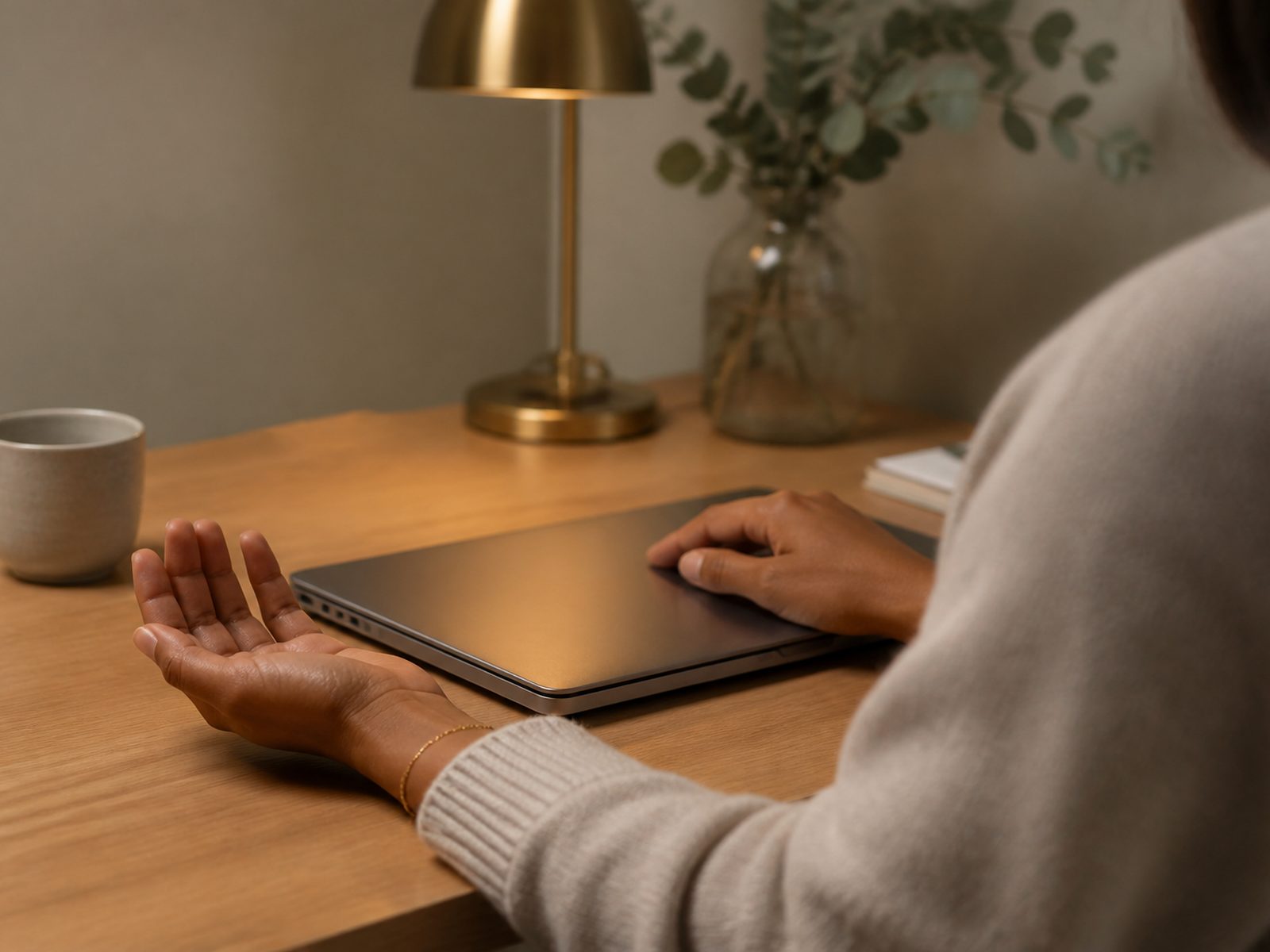
You do not need a new stress protocol in this article. You need the outside starter we already published, done gently.
Go to How to Massage Your Masseter at Home. Do that one starter. Stay off the joint. Stop if it goes sharp.
That is the whole today list. Do not add a ten-step calm-down sequence, temple grinding, or inside-the-mouth experiments because a video did.
If the outside work is not the whole story, that is expected. Intraoral work belongs in class. The safety version of that conversation is here: Intraoral Massage at Home.
If you want guided work on this muscle, Release Your Jaw is the full class. $247, lifetime access.
Before you put hands on your face
A stressed day does not erase the skip list.
Skip jaw self-massage, and see a dentist, PT, or physician instead, if:
You have an acute jaw injury, bruise, or recent trauma
You have an active infection (dental, sinus, or skin) near the jaw
You have had recent dental work, oral surgery, or extractions that have not fully healed
You notice unexplained swelling, numbness, a new lump, or pain that is getting worse
Your jaw locks open or closed
Do not push through those. A braced face can wait. A lock should not.
When to see someone
See a dentist or a PT who works with jaws if clenching is new, getting louder, or paired with tooth damage, locking, or unexplained swelling. See a physician if head pain, dizziness, numbness, or other symptoms sit outside what a sore cheek explains.
If what you are really asking is about anxiety, panic, or mood, that is a mental health clinician, not a massage blog. This page will not sort that for you, and it will not pretend jaw circles are therapy.
A night guard, if your dentist gave you one for grinding or clenching, still stands. Soft tissue work sits beside it, not instead of it.
What a guided class covers
Lesson 1 is breath and the fight-or-flight loop that keeps the jaw braced. Those drills live in class, not here.
Lesson 7 is the full external jaw sequence, beyond one starter. Lesson 8 is intra-oral work, including muscles you cannot reach well from the outside. Lesson 12 is what to do the morning the jaw wakes up already angry. There are seven daily routines built for real life.
That is the map if the masseter starter helped a little and you want guidance instead of another search.
Common questions
Why do I clench when I’m stressed?
Clenching is a common bracing habit when the nervous system reads a threat. The jaw is an easy place for that brace to live. That is a pattern, not a diagnosis.
Can massage stop clenching?
It can help sore, braced muscle feel softer. It does not reliably stop the clench habit on its own, especially if the day keeps lighting the same fuse.
Is it anxiety?
Sometimes stress clenching and anxiety travel together. Sometimes they do not. A blog post cannot diagnose anxiety. If that question matters, ask a qualified clinician.
What is the difference between jaw clenching and grinding?
Clenching is a sustained bite. Grinding is teeth working against teeth, often at night. Many people do both. Soreness after grinding has its own guide linked above.
Should I massage during a stressful day?
If the tissue is dully sore and nothing on the skip list is true, the outside starter can be reasonable. If you are sharp, swollen, or locked, leave it. A stressful day is not a reason to dig harder.
When should I see someone?
Locking, unexplained swelling, numbness, worsening pain, tooth damage, or symptoms that do not belong to a tired cheek. Also if you already know you need that appointment.
Work with Brooke
The outside starter is a place to begin. You can do that today with the masseter guide.
If you want Brooke in your ear for breath, the full external sequence, and intra-oral work, Release Your Jaw is $247 once, lifetime access. Thirteen lessons, seven daily routines, no equipment.
A clenched jaw is often a braced nervous system wearing a face. Circles can help the muscle. The class is where the loop gets taught with stop rules, so you are not inventing care from a red light and a search bar.
Brooke Neborsky, LMT
Brooke Neborsky, LMT, built Release Your Jaw for people who want guided work, not more guessing. It is $247 once, lifetime access.
Educational content only. This is not a substitute for medical or dental care. Read the medical disclaimer before you start.