


Your temple feels braced by mid-afternoon. Not always a full headache. Just a tight band at the side of the head that shows up with a clenched jaw. You search how to massage temporalis, and the videos either dig hard into the soft temple or promise to end migraines in three minutes.
This guide covers how to find the temporalis, one gentle outside starter, and when to take your hands off. It is the same play as our masseter guide: name the muscle, try one thing, keep the stop rules. It is self-care education, not a diagnosis. It will not fix TMJ or TMJD. It will not treat migraine. It will not teach a full scalp or temple protocol.
Educational self-massage only. This is not a substitute for medical or dental care. Stop if pain increases. See a qualified clinician for persistent jaw, ear, or head pain, locking, sudden severe headache, neurological symptoms, or anything you cannot explain. Read the medical disclaimer.
In this guide
What the temporalis is
The temporalis is a broad chewing muscle on the side of your head. It sits in the temple area and fans upward under the hairline. Its job, with the masseter, is to close the jaw. Every clench, every grind, every hour of jaw-braced focus runs through it.
That is why temporalis jaw tension and temple muscle massage show up in the same search. The cheek is not always where the day feels loudest. Sometimes the complaint lands at the temple first.
How to find it
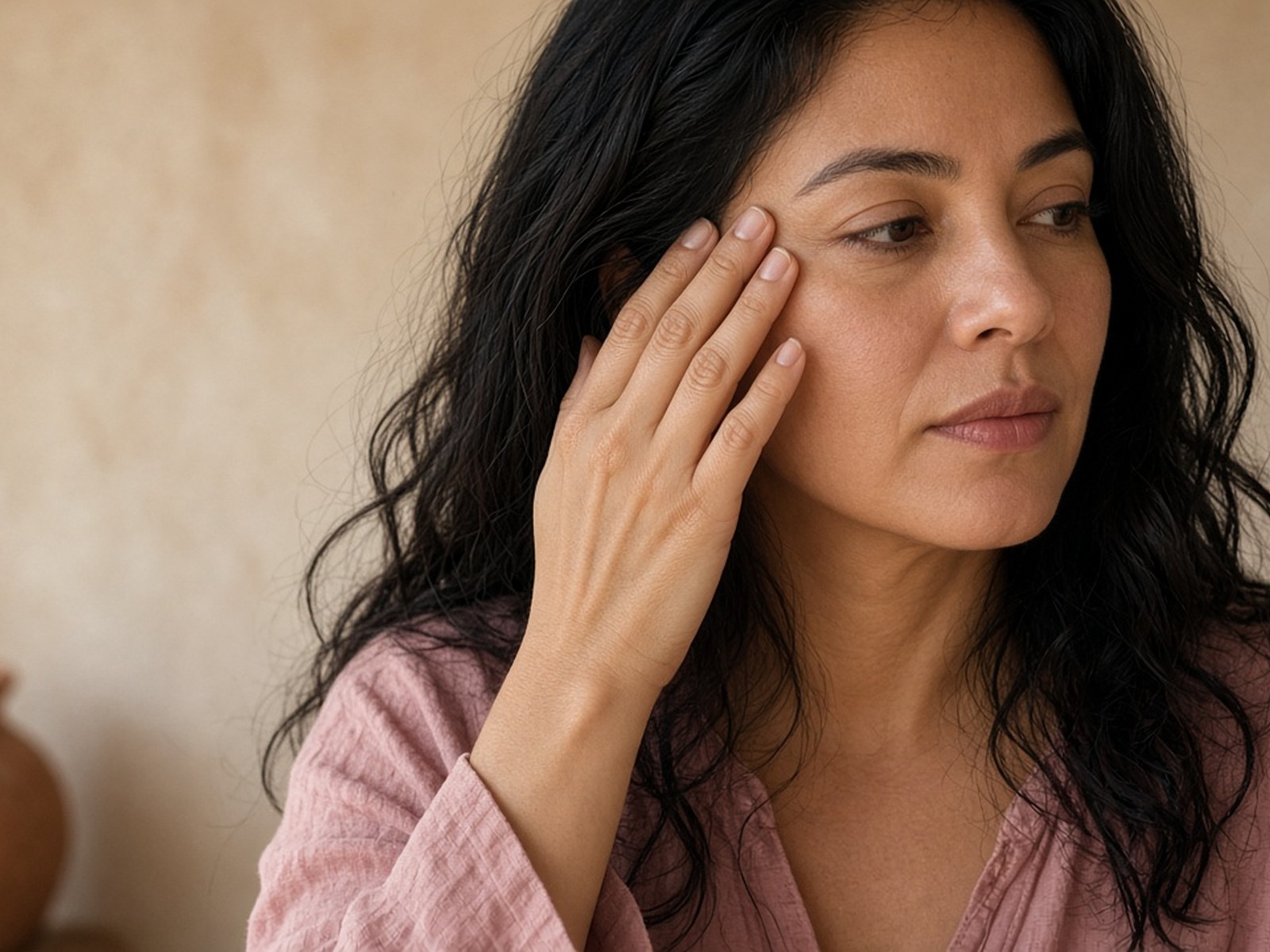
- Place two or three fingertips on the side of your head, above the cheekbone, in the soft temporal area (not right on the eye socket, not in front of the ear canal).
- Gently bite down, like you are closing your teeth together. Feel for a thin sheet of muscle firming under your fingers.
- Unclench and feel it soften.
- Check both sides. One side often feels tighter or more tender. That is common. It is not a diagnosis.
If you want the cheek side of the same story first, start here: How to Massage Your Masseter at Home.
Stay off the joint and soft digging
The hinge just in front of your ear is the jaw joint. It is not the temporalis. If you press there and feel sharpness, a pop, or joint pain, move up and slightly forward onto the temporalis sheet, not deeper into the joint.
Do not dig hard into the thin soft temple near the eye. Do not chase a “migraine point” with an elbow or a tool. Stay on muscle you can feel with the bite test. Light to moderate pressure only.
Why the temple rides with the jaw
A braced jaw is often a loop. Clenching loads the masseter and the temporalis together. Some people feel that load as cheek ache. Some feel it as temple tightness. Some feel both.
Temple ache that travels with jaw bracing is covered here: Can a Tight Jaw Cause Tension Headaches?. Daytime clenching as the fuse is here: Jaw Clenching and Stress. Morning grind soreness is here: Teeth Grinding Self Massage.
Hands on the temporalis may help a braced sheet soften. They do not turn off the stress habit that keeps reloading it. They do not treat migraine.
Brooke Neborsky, LMT, includes temporalis with the jaw map inside Release Your Jaw. This article names the muscle and gives one starter. It will not republish the scalp lesson.
One gentle starter
You do not need a full temple routine today. You need one move, done gently, only if nothing on the skip list is true.
- Find the temporalis with the bite test above. Let the jaw hang loose. Mouth closed, not clenched, not stretched open.
- Rest two or three fingertips flat on the muscle sheet above the cheekbone. Stay off the joint. Stay off the thin soft spot next to the eye.
- Make small, slow circles, about the size of a coin. Let the skin move with your fingers. Do not drag across it. Do not dig.
- Keep going for about 30 to 60 seconds. If the tenderness eases into a dull ache you can stay with, repeat on the other side. If it goes sharp, electrical, or your headache ramps up, stop.
That is the whole temporalis self massage starter for this page. A few gentle minutes beats a hard temple grind. Once a day is enough while you learn how your head responds.
If the cheek feels louder than the temple, do the masseter starter first and leave the temple alone today.
If you want guided work with stop rules and the fuller map, Release Your Jaw is the class. $247, lifetime access.
When temple work is the wrong move
Massage temporalis for headache searches pull a lot of cure claims. This page will not copy them.
Gentle temporalis work may help a braced temple feel less braced for some people. It is not a migraine treatment. It is not a stand-in for a neurological workup. A sudden severe headache, a headache with vision change, weakness, confusion, fever, or a “worst headache of my life” feeling is not a massage day. Get help.
If your temple pain is new, one-sided, and escalating, stop self-massage and see a clinician. If clicking or ear pressure is the louder neighbor, those guides are here: Jaw Clicking and Popping and Ear Fullness and Your Jaw.
Before you put hands on your head
Tight temporalis is not a free pass to dig.
Skip self-massage, and see a dentist, PT, or physician instead, if:
You have a sudden severe headache, neurological symptoms, vision change, weakness, confusion, or fever
You have an acute head or jaw injury, bruise, or recent trauma
You have an active infection near the jaw, ear, or scalp
You have had recent dental work, oral surgery, or extractions that have not fully healed
Your jaw locks open or closed
You notice unexplained swelling, numbness, a new lump, or pain that is getting worse
Digging at the temple makes your headache louder, not quieter
Do not push through those. This is not the week for temporalis experiments.
What this can and cannot do
Gentle, consistent work can help a braced temporalis feel a little less braced. That is it.
It will not diagnose or treat TMJ or TMJD. If you already have a TMJ diagnosis, treat this as general self-care context. For plain-language medical background on TMD, the NIDCR page on TMD is a calm place to start.
It will not replace a night guard if your dentist gave you one. Soft tissue work sits beside it, not instead of it.
On headaches: some people notice that easing this muscle takes a little edge off a temple ache that rides with clenching. That is a gentle thing to explore. It is not a migraine cure. Persistent or changing headaches need a proper evaluation. The jaw-headache link is here: Can a Tight Jaw Cause Tension Headaches?.
Common questions
Where is the temporalis?
On the side of the head above the cheekbone, in the temple area under the hairline. Bite gently and feel the sheet firm. That is it.
How hard should I press at the temple?
Dull and achy is right. Sharp, radiating, electrical, or headache-ramping means lighten up or stop. The temple is thinner tissue than the cheek masseter. Start lighter than you think.
Can it help headaches?
Sometimes a little, when the temple ache rides with a braced jaw. It is not a treatment for migraine or every headache. See the sections above.
Massage temporalis or masseter first?
If the cheek bulge is the loud story, start with the masseter. If the temple sheet is louder and the skip list is clear, try the temporalis starter. You do not need both on day one.
Can it make headaches worse?
Yes. Digging, tools, or working through sharp pain can irritate the area. Stop if symptoms ramp up.
When to see a clinician?
Anything on the skip list, locking, unexplained swelling, numbness, worsening pain, sudden severe headache, or neurological symptoms. Do not wait those out with circles.
What a guided class covers (named, not taught)
You do not need a mystery. You need names.
Release Your Jaw covers breath and the clench cycle (Lesson 1), the full external jaw sequence (Lesson 7), intra-oral work (Lesson 8), and what to do the morning the jaw wakes up already angry (Lesson 12), plus seven daily routines. Temporalis work that belongs with the jaw map lives in class, with stop rules.
This article will not teach the scalp lesson. Naming the class is how you tell guided care from a migraine-cure reel.
Work with Brooke
The bite test and one gentle starter are a place to begin when the tissue is appropriate. You can do that today. Pair it with the masseter guide when the cheek is part of the story.
If you want Brooke guiding you through breath, the full external sequence, intra-oral work, and temporalis with the rest of the jaw map, Release Your Jaw is $247 once, lifetime access. Thirteen lessons, seven daily routines, no equipment.
A tight temple and a braced jaw often travel together. Soft tissue care can help a muscle. It cannot replace medical or dental care. The class is where the rest of the map lives.
Educational content only. This is not a substitute for medical or dental care. Read the medical disclaimer before you start.