

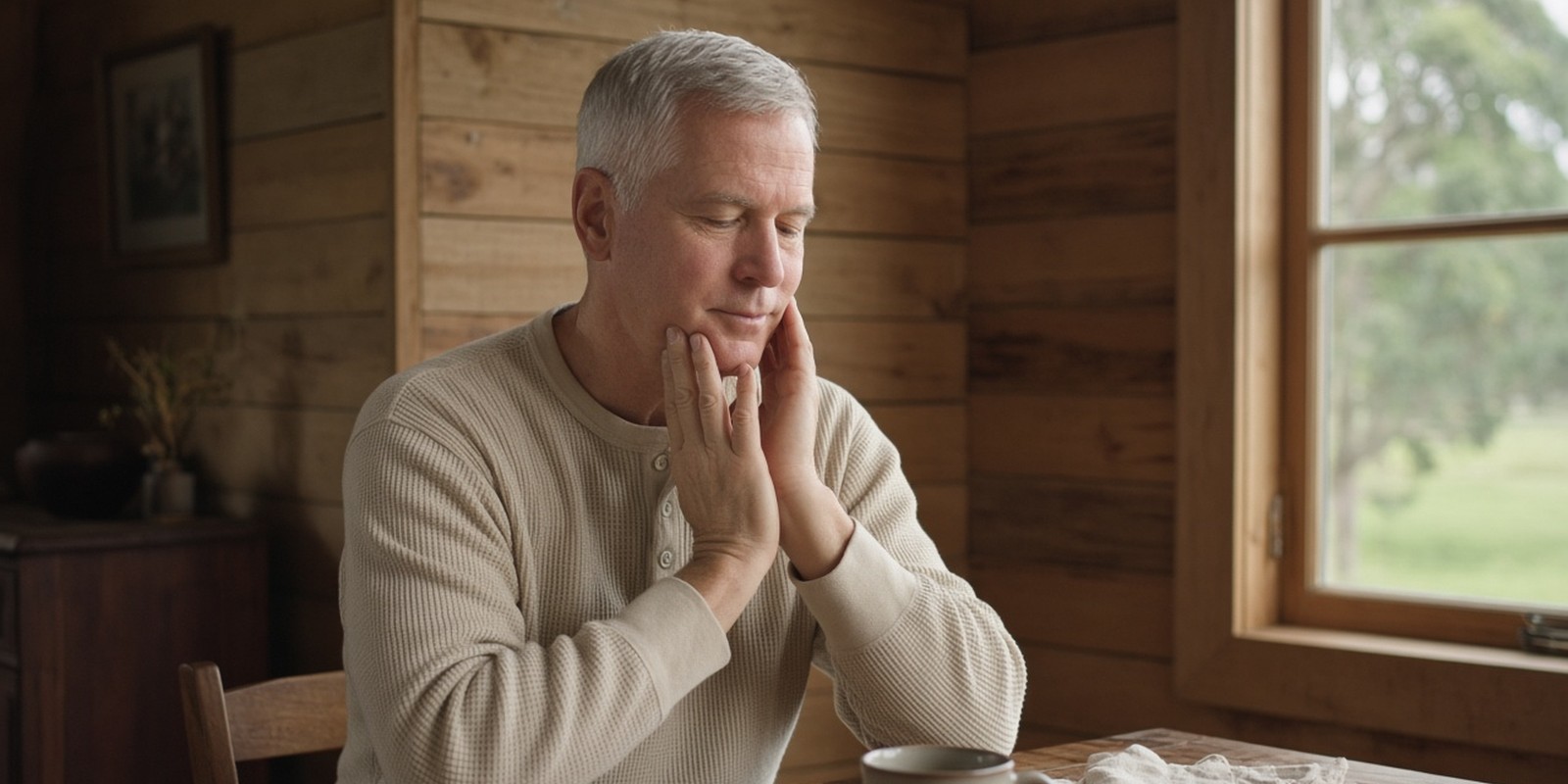
Your jaw aches by the end of the day. Maybe it clicks. Maybe your temple joins in, or your ear feels full, or you wake up already clenched. You search TMJ self massage and find two kinds of answers: a thin list of “5 pressure points,” or a polite “see a professional” and nothing else.
This page sits in between. It explains what TMJ self massage really means, which muscles usually carry jaw tension, one safe place to start, and what to leave alone. It is a map of the guides we already have, not a new drill. It is self-care education, not a diagnosis. It will not fix TMJ or TMJD, and it does not replace a dentist, physical therapist, or physician.
Educational self-massage only. This is not a substitute for medical or dental care. Stop if pain increases. See a qualified clinician for persistent jaw, ear, or head pain, locking, or anything you cannot explain. Read the medical disclaimer.
In this guide
What “TMJ self massage” really means
TMJ stands for temporomandibular joint. It is the hinge just in front of each ear, where the jaw meets the skull. People often say “TMJ” when they mean jaw pain in general, and TMD or TMJD when a clinician has named a disorder.
Here is the part that matters for your hands. The joint is not a muscle. You cannot massage a joint loose, and pressing hard on it is how people irritate it. What you can reach safely are the muscles around the joint, the ones that open, close, and brace the jaw all day.
So on this site, TMJ self massage means gentle work on the jaw muscles, with the joint left alone. That is the approach on every page of this site.
The muscles that usually carry jaw tension
You do not need an anatomy course. You need to know which neighbors tend to hold the load, and where each one is covered.
Masseter
The masseter is the thick chewing muscle on the cheek, between the cheekbone and the angle of the jaw. Bite down gently and you can feel it bulge. For most people it is the loudest part of a braced jaw, and the easiest to find.
Our starter for it is here: How to Massage Your Masseter at Home.
Temporalis
The temporalis is the broad muscle at the side of the head, in the temple area. It closes the jaw alongside the masseter, which is why a clenched jaw can show up as temple tightness. Temple ache that rides with clenching is covered in Can a Tight Jaw Cause Tension Headaches?
The find-it guide and one gentle starter are here: How to Massage Your Temporalis at Home.
Inside-the-mouth muscles
Some jaw muscles, including the pterygoids, sit deeper and are only reachable from inside the mouth. That is real, useful work, and it comes with hygiene, angle, and stop rules that are best learned with guidance.
What is safe to know before you try anything is here: Intraoral Massage at Home.
Neck and breath
The jaw does not work alone. A forward head and a braced neck can load the jaw, and stress can keep the clench cycle running no matter how good your hands are. Those two pieces live here: Tight Neck and Jaw and Jaw Clenching and Stress.
One safe place to start
If you only do one thing today, do the masseter starter. It is on the outside of the face, easy to find with the clench test, and it keeps your hands off the joint.
Go to How to Massage Your Masseter at Home. Find the bulge. Let the jaw hang loose. Do the one set of slow circles. Aim for dull, achy pressure you can stay with, never sharp. Stop if it ramps up.
That is it for today. One starter done gently beats a stack of drills done hard. Once a day is plenty while you learn how your jaw responds.
If your temple is louder than your cheek, the temporalis starter is the alternative. Pick one, not both, on day one.
If you want guided work with stop rules and the full map, Release Your Jaw is the class. $247, lifetime access.
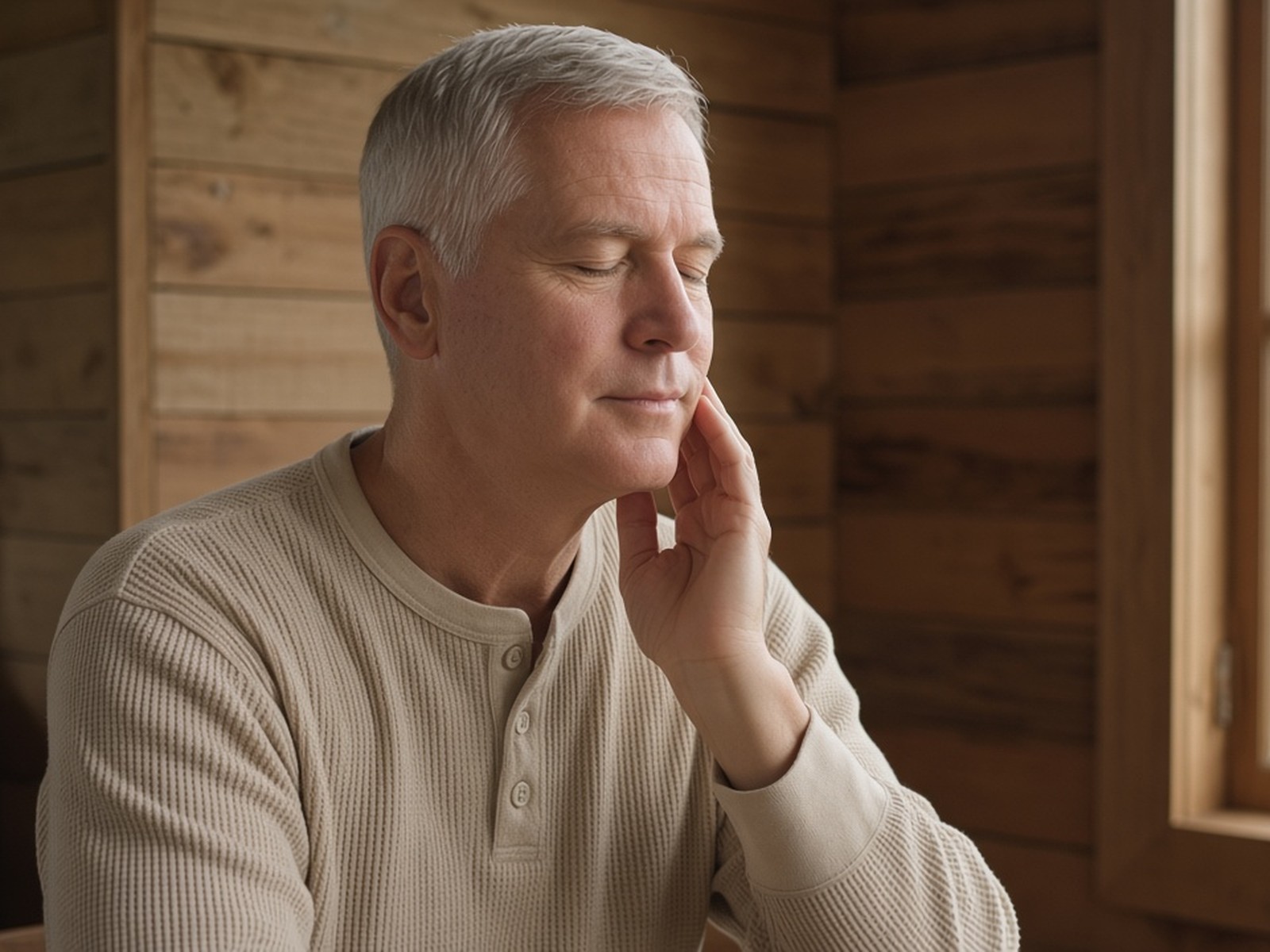
What to leave alone
TMJ massage at home goes wrong in a few predictable ways. Skip all of these:
- Cracking or popping the joint on purpose. Clicking has its own guide: Jaw Clicking and Popping. Forcing it is not self-care.
- Hard digging in front of the ear. That hinge is the joint, not a knot.
- Tools, knuckles, or massage guns on the joint or the face. Hands are enough.
- Inside-the-ear work. Ear pressure that travels with the jaw is covered in Ear Fullness and Your Jaw. Nothing goes in the ear canal.
- Pushing through sharp, electrical, or spreading pain. That is a stop signal, not a sign it is working.
Skip-if list and when to see a clinician
Skip self-massage, and see a dentist, PT, or physician instead, if:
Your jaw locks open or closed
You have an acute jaw injury, bruise, or recent trauma
You have an active infection near the jaw, ear, or teeth, or sores inside the mouth
You have had recent dental work, oral surgery, or extractions that have not fully healed
You notice unexplained swelling, numbness, a new lump, or pain that is getting worse
You have sudden hearing change or dizziness
For a sudden severe headache, facial drooping, slurred speech, or other symptoms that feel neurological, skip the massage and get urgent medical care.
See a dentist if grinding is wearing your teeth, if your bite feels like it changed, or if clicking has turned painful. See a PT who works with jaws if the muscle story is loud and not settling. If you already have a TMJ or TMD diagnosis, treat this page as general self-care context. For plain-language medical background, the NIDCR page on TMD is a calm place to start.
A night guard, if your dentist gave you one, still stands. Massage sits beside it, not instead of it. More on that in Teeth Grinding Self Massage.
Why a guided map beats random videos
Random videos give you pieces. One person digs at the joint. Another sells a gadget. A third shows ten moves in ninety seconds with no stop rules. You end up guessing, and guessing is how a sore jaw becomes a louder one.
A guided map gives you order. It tells you which muscle to start with, how hard to press, when to stop, and what to do on the morning the jaw wakes up already angry.
Release Your Jaw covers breath and the clench cycle, the full external jaw sequence, intra-oral work including the pterygoids, and a flare-up plan for bad mornings, plus seven daily routines built for real life. We already share one short outline in A Daily Jaw Self-Massage Routine. The rest lives in class, with stop rules.
If face tension is part of your picture, Facial Massage for Jaw Tension explains where the face and jaw overlap.
Common questions
Is massage good for TMJ?
Gentle work on the jaw muscles can help a braced jaw feel less braced for many people. It does not treat the joint, and it does not cure TMJ or TMD. Think of it as muscle care beside proper dental or medical care.
Can self massage make TMJ worse?
Yes, if you dig into the joint, use tools, force clicks, or push through sharp pain. Light, slow work on muscle, with the joint left alone, is the safer lane. Stop if symptoms ramp up.
What muscles do you massage for TMJ?
Usually the masseter on the cheek and the temporalis at the temple from the outside. Deeper muscles like the pterygoids are reached from inside the mouth and are best learned with guidance. Neck and breath play a part too.
How often should I massage my jaw?
Once a day is plenty while you are learning. A few gentle minutes most days beats one long session.
Should I massage inside my mouth?
Not from a blog post. Intraoral work is useful, but it needs clean hands, the right angle, and clear stop rules. Start with Intraoral Massage at Home for what to know first, and learn the technique in class.
When should I see a dentist or PT?
Anything on the skip list, a changed bite, painful clicking, worn teeth, or pain that is not settling after a couple of weeks of gentle care. Do not wait those out.
Work with Brooke
If you want one thing to try today, start with the masseter guide, gently, once.
Brooke Neborsky, LMT, built Release Your Jaw for people who want guided work instead of more guessing: breath, the full external sequence, intra-oral work, a flare-up plan, and seven daily routines. It is $247 once, lifetime access. Thirteen lessons, no equipment.
A braced jaw is usually a few muscles and a habit, not one magic point. Soft tissue care can help the muscles. It cannot replace dental or medical care. The class is where the full map lives.
Educational content only. This is not a substitute for medical or dental care. Read the medical disclaimer before you start.